More Than a Gathering: Tradition, Identity and Community at ASU’s 37th Annual Pow Wow
By Talia Williams
The 37th Annual Pow Wow at ASU brought more than just energy to Tempe — it showcased generations of Indigenous culture and identity in motion. The three-day gathering took place April 17-19 at Desert Financial Arena and transformed the space into a living, soul-soothing expression of Native American traditions.
Rooted in family, respect and dignity, a powwow is a direct link between the past and the future. At first glance, the event is often seen as just vibrant displays of color, music and movement, but it stands as a spiritual legacy.
Powwows are not spectacles or just performances. They are ceremonies of connection. Native families and communities from across the United States and Canada came together to participate in a shared cultural experience that reinforced belonging. Each hand-crafted regalia piece and every carefully braided strand of hair reflected rituals practiced for generations. What may look like a “costume” to outsiders was, in reality, a living archive of family history and cultural pride.
The experience was immersive and multi-sensory. Each day began with pre-show performances, where a small group sang with hand-held instruments, their voices echoing through the arena as dancers gradually opened the floor for the night ahead. Led by Native veteran flagbearers, dancers lined up with anticipation and entered one by one during each Grand Entry, telling their story one step at a time.
Shortly after, intertribal and contest dancing filled the space, marking the start of each dance category night. Performers from different tribes displayed their regalia and traditional dance techniques. On Saturday, April 18, the audience was especially captivated by the Tiny Tot Grand Entry & Pow Wow. Young children, mirroring their parents and relatives, paraded across the floor behind the smallest flag bearer, blending innocence with tradition in a way that felt both tender and powerful.
However, the experience wasn’t just confined to the arena. More than 70 vendors and several Native food trucks lined the Native Art Market in the Desert Arboretum Park and along Ziegler Drive. Spots like Emerson Fry Bread and Lolly’s Lemonade kept the crowd coming back for more. Guests enjoyed made-to-order fry bread piled high with taco or burger toppings, paired with refreshing lemonade that shimmered with sparkly lights inside the cups.
New additions further enriched the experience. For the first time, the Mr. and Mrs. Indigenous ASU Pageant and Coronation took place during the powwow. Typically held at Discovery Hall, the original home of the science department on the Tempe campus, the pageant drew an even larger audience to the celebration.
Throughout Saturday, students competing for the crown demonstrated their talent, shared their knowledge and expressed what it meant to represent the Native students on campus. Zach Ander Thomas and Candice Joe were crowned 2026-2027 Ms. and Mr. Indigenous ASU pageant winners and will take on the role of ambassadors, promoting Indigenous culture and strengthening representation within the campus community.
Guests explored booths filled with handmade jewelry, paintings, custom shirts and Indigenous-style ASU apparel, supporting local, family-run, and Native-owned businesses.
One business reflected the deep family ties woven throughout the event. Charmayne Dawahoya, owner of Bear Beans Coffee, came from a lineage rooted in music. Her grandfather, Midnite Kane, started a band with his brothers called Apache Spirit in the early 1970s, recording more than 10 studio albums and becoming well-known throughout the Valley. Her mother, Lisa, joined the band as a teenager and later became its lead singer, while her brother Chris played lead guitar and her father Dominic accompanied them on acoustic guitar.
During the powwow, this connection came full circle. As guests congregated in the Desert Arboretum Park to enjoy food and live entertainment, Dawahoya and her partner served coffee just steps away from the stage where her family performed. “We had a direct view to cheer our family on all night,” said Dawahoya. “We also honored our grandfather by naming a beverage after him — the ‘Midnite Coffee.’ “It’s moments like these that reveal how deeply intertwined family and community are in this shared affair.” Many vendors shared similar stories, with relatives performing in the arena or on stage throughout the weekend.
Since 2019, ASU 365 Community Union has been honored to take part in the powwow — an event that embodies its mission of Connecting Communities™. Its involvement reflects an ongoing commitment to building meaningful relationships and creating spaces where heritage and community are celebrated year after year.
To deepen the connection between Indigenous culture and the broader community, ASU 365 Community Union partnered with Elias Jade Not Afraid, a self-taught bead artist from the Crow Nation in Lodge Grass, Montana, to create Rez Geometry: A Court of Nations. This vibrant geometric basketball court highlights elements inspired by Arizona’s Indigenous heritage, including patterns reminiscent of traditional basketry and rug designs.
With work featured in the Smithsonian and Vogue, Elias Jade Not Afraid drew inspiration from his childhood in the country, playing “rez ball” with his cousins. Rez Geometry: A Court of Nations was showcased during the 37th Annual Pow Wow at ASU. For its debut, powwow dancers and the drum circle performed atop the court, bringing the court to life through movement and sound.
Ultimately, the 37th Annual Pow Wow at ASU created a space of remembrance and renewal — a place where families’ customs are preserved and actively lived. The gathering reaffirmed that these traditions are not static but evolving expressions of identity. It highlighted the presence and contributions of Native communities by bringing together numerous nations in one shared space. For those who have never attended a Pow Wow, this is an open invitation to step into another world and experience a culture both deeply rooted and vibrantly alive.
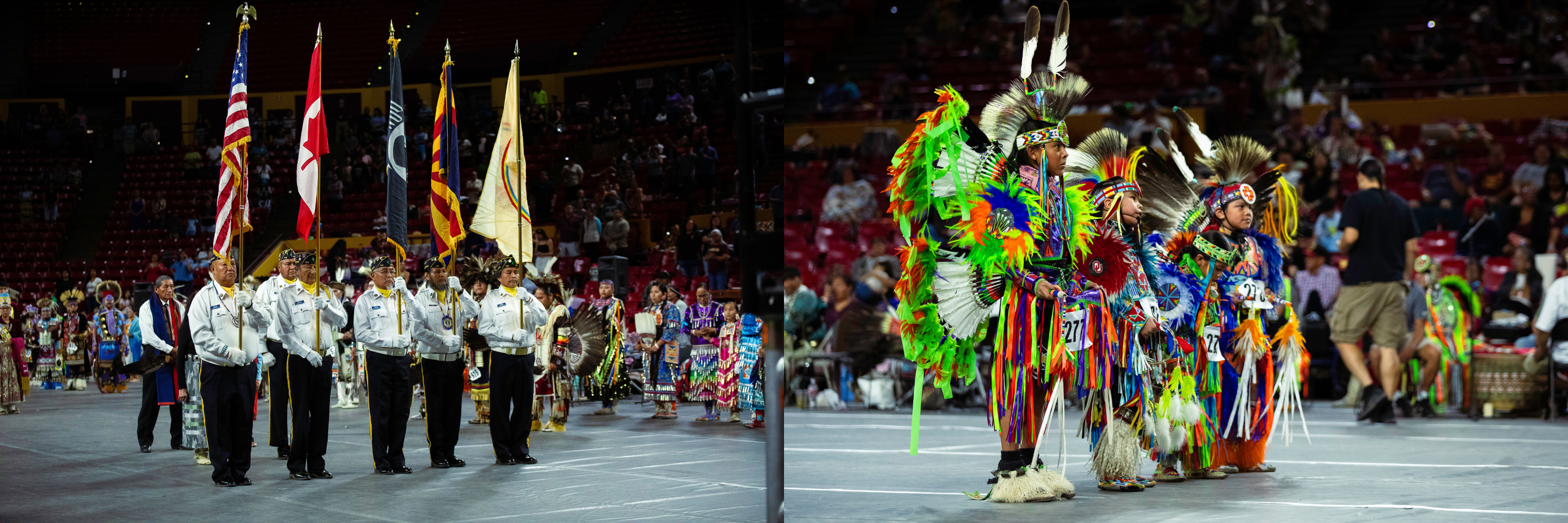
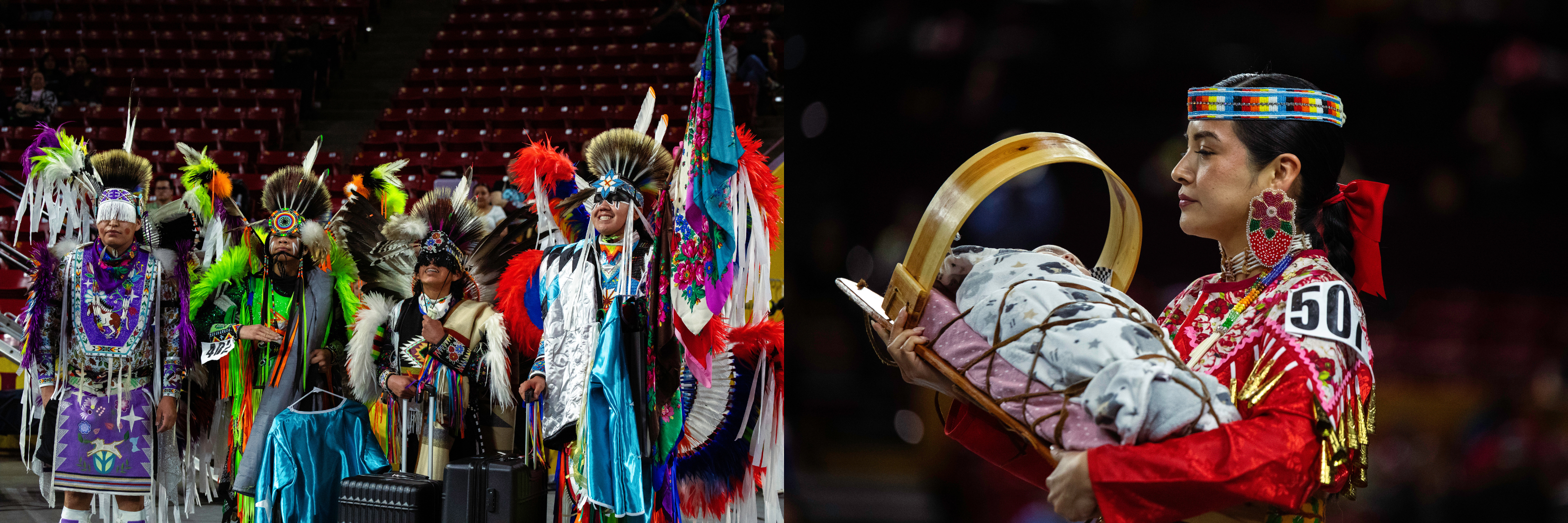
Image credit: Claycaptures